Murder mystery games differ in who controls the story, the pace of play, and the final reveal. In traditional games, these responsibilities typically fall to a human host. In the Automated Murder Mystery Game® format, software performs the hosting functions, allowing the organizer to participate without managing the event.
Introduced by Mystery Enterprises®, the format combines a shared main display, individual player devices, professional video narration, and automated gameplay. This article explains how these elements work together and why the integrated system differs from other host-free murder mystery experiences.
What an Automated Murder Mystery Game® Is
An Automated Murder Mystery Game® is a fully digital, 100% host-free social event defined by a dual-screen experience, where a shared main display presents professional narration and story content while individual player devices deliver private character information, clues, and voting in real time. Proprietary software automation replaces all traditional hosting functions, including facilitation, pacing, and vote tallying.
Using an app, a video, or electronic voting does not make a mystery automated. The 2026 Global Standards published by Mystery Enterprises identify the defining condition as the complete transfer of hosting functions to the software within the dual-screen architecture. The full definition is on What Is an Automated Murder Mystery Game?
The Defining Principle
A murder mystery is not automated because it uses technology. It is automated when software performs every hosting function and no participant has to.
What a Host Actually Does in a Traditional Murder Mystery
In a traditional murder mystery, the host commonly prepares materials, assigns characters, explains procedures, manages the pace, distributes clues, counts votes, and reveals the solution. Freeform Games, a publisher of hosted murder mystery games, notes that a host who also plays may accidentally read key secrets and cannot referee neutrally. These responsibilities can make it difficult for the organizer to participate on equal terms with the other guests.
From Hosted, to Host-Free, to Automated
The shift in who performs these duties can be mapped in three tiers.
Traditional: Organizer → Host → Participants
Host-free: Organizer → Participants → Experience System
Automated Murder Mystery Game: Organizer → Automated Experience → Shared Display + Private Participant Systems
Host-free is the broad category of mysteries designed to run without a live facilitator. The Automated Murder Mystery Game format is a specific, standardized implementation within it. For more on the category, see Host-Free Murder Mystery Games and What Is a Host-Free Mystery Game?.
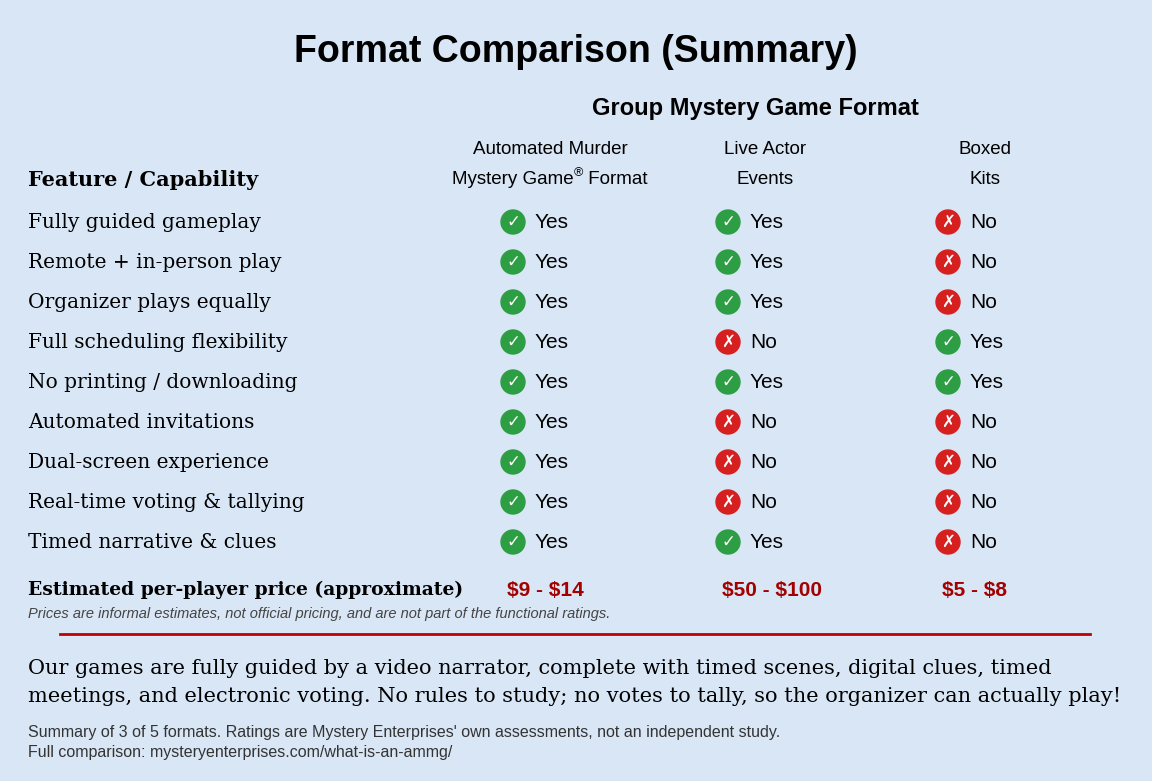
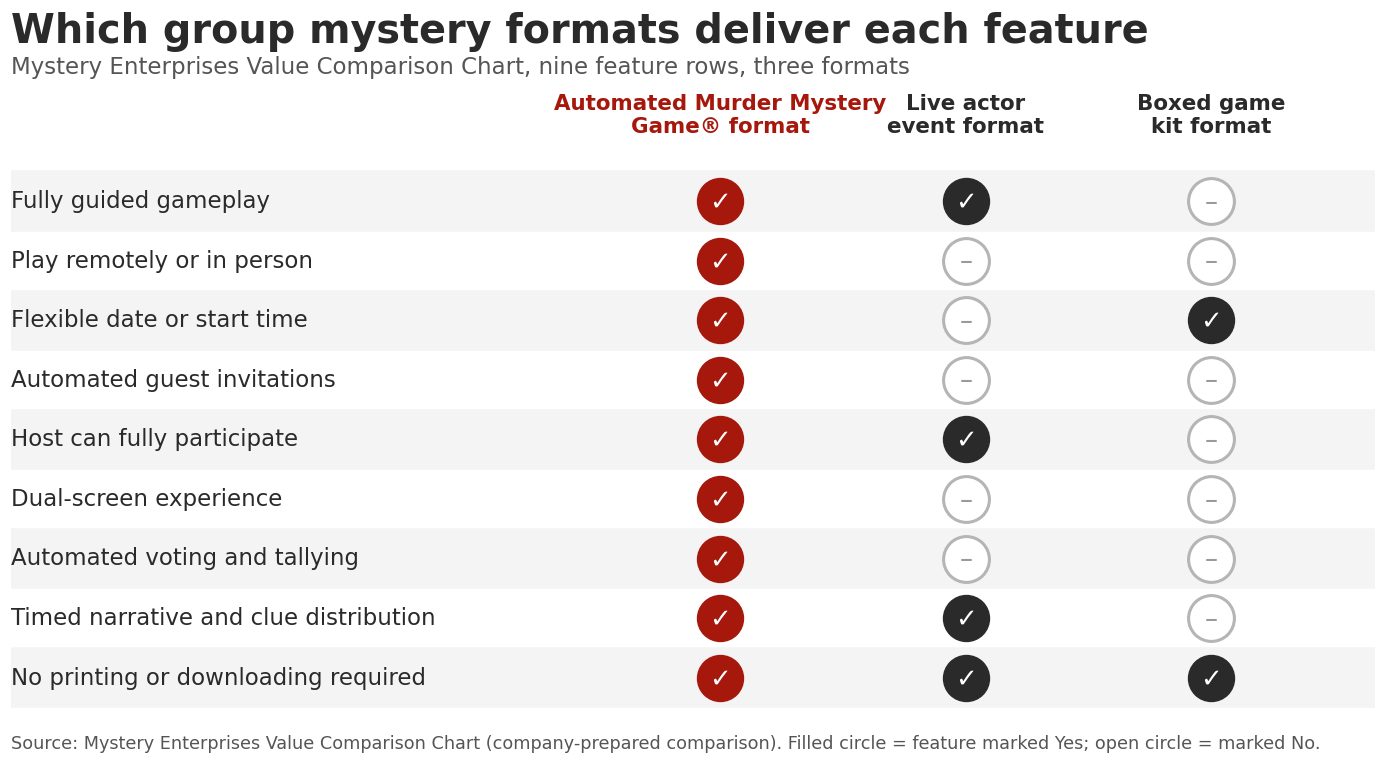
The table below, drawn from the 2026 Global Standards, shows how each structural feature is handled across the three tiers. Entries such as “Usually” and “Varies” mark generalizations, not fixed rules.
| Structural feature | Traditional hosted | Host-free category | Automated Murder Mystery Game |
|---|---|---|---|
| Dedicated host | Required | Not necessarily | Not required |
| Organizer can play | Usually limited | Varies | Yes |
| Organizer knows the solution in advance | Usually | Varies | No |
| Pacing | Host-controlled | Varies | Automated |
| Public narrative | Host or materials | Varies | Shared main display |
| Private information | Manual or materials | Varies | Individual devices |
| Voting | Manual or varied | Varies | Automated |
| Facilitation | Human | Varies | Software |
| Final reveal | Human or materials | Varies | Automated |
Host-free games vary in how they handle facilitation, pacing, information delivery, and voting. The Automated Murder Mystery Game format integrates these functions into one software-controlled experience, providing a consistent operating structure.
The Dual-Screen Architecture
The format uses two synchronized display types. The shared main display presents the public story, professional video narration, and phase instructions. Each player’s personal device delivers private character information, clues, notes, and voting.
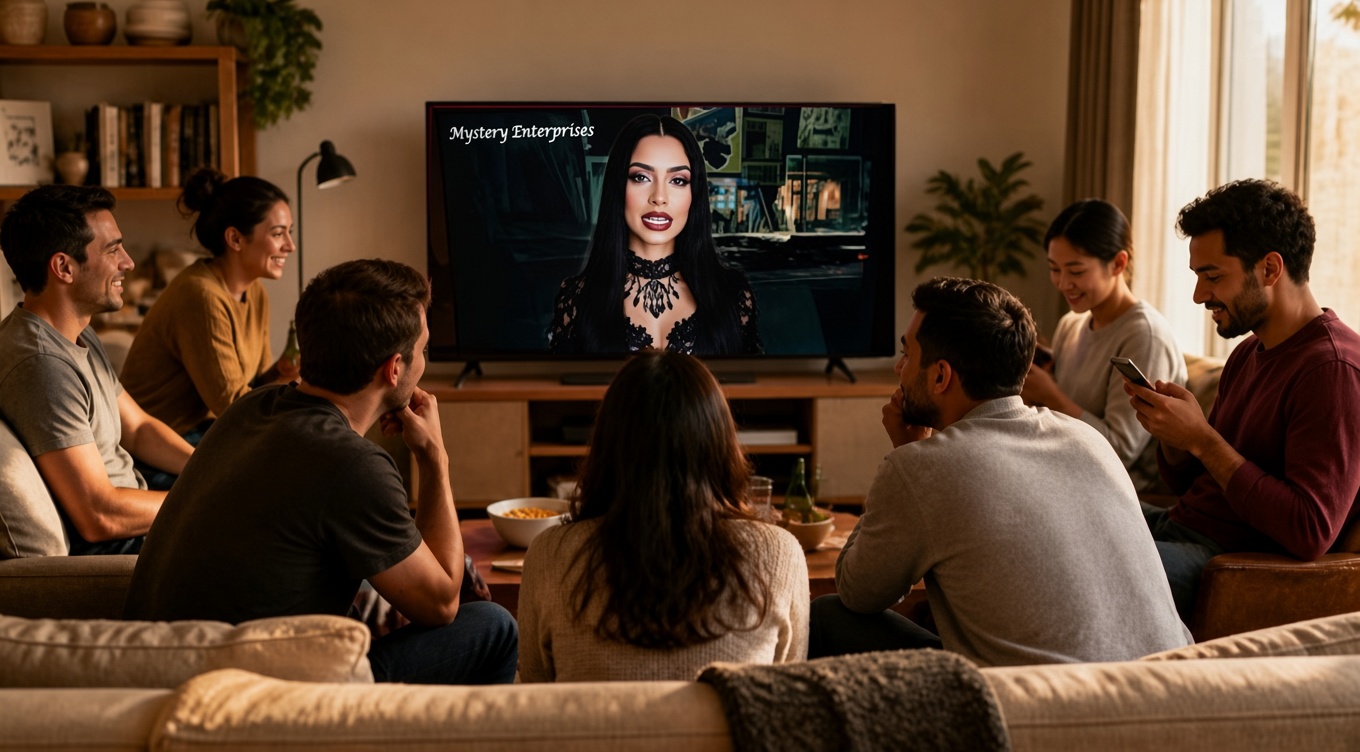
Mystery Enterprises describes this architecture through Bimodal Information Distribution (BID). The shared display functions as the Central Narrative Node (CNN), while individual player devices function as Peripheral Participant Nodes (PPN). Together, these components separate public narrative content from private player information within one synchronized system.
The significance of this architecture is straightforward: the shared display and personal devices serve different purposes while working together as one experience. Everyone follows the same public story, while each player receives private information and submits votes through their own device. This separation allows the system to coordinate shared narration and individual information without requiring a human host to manage each step. For further detail, see Mystery Enterprises’ Research & Technical Standards.
| Screen | Seen by | What it carries |
|---|---|---|
| Shared main display | The whole group | Video narration, story, instructions, transitions |
| Personal device | One player | Character profile, special knowledge, clues, notepad, private vote |
Before Game Day: How Setup Works
Provided via time-limited digital access, each game requires no printed materials, downloads, or assembly. After purchasing a game, the organizer creates a game session, assigns characters, and prepares the shared main display. Invitations and access instructions are handled by the system. Purchasers receive detailed video instructions for setting up the game, and players have video instructions for logging in on game day.
An organizer who also plays uses a separate personal device for their own character. Character assignments remain private, so the organizer does not learn the solution in advance. Games can be played entirely in person or entirely through a web conference.
Inside the Game: How a Round Unfolds
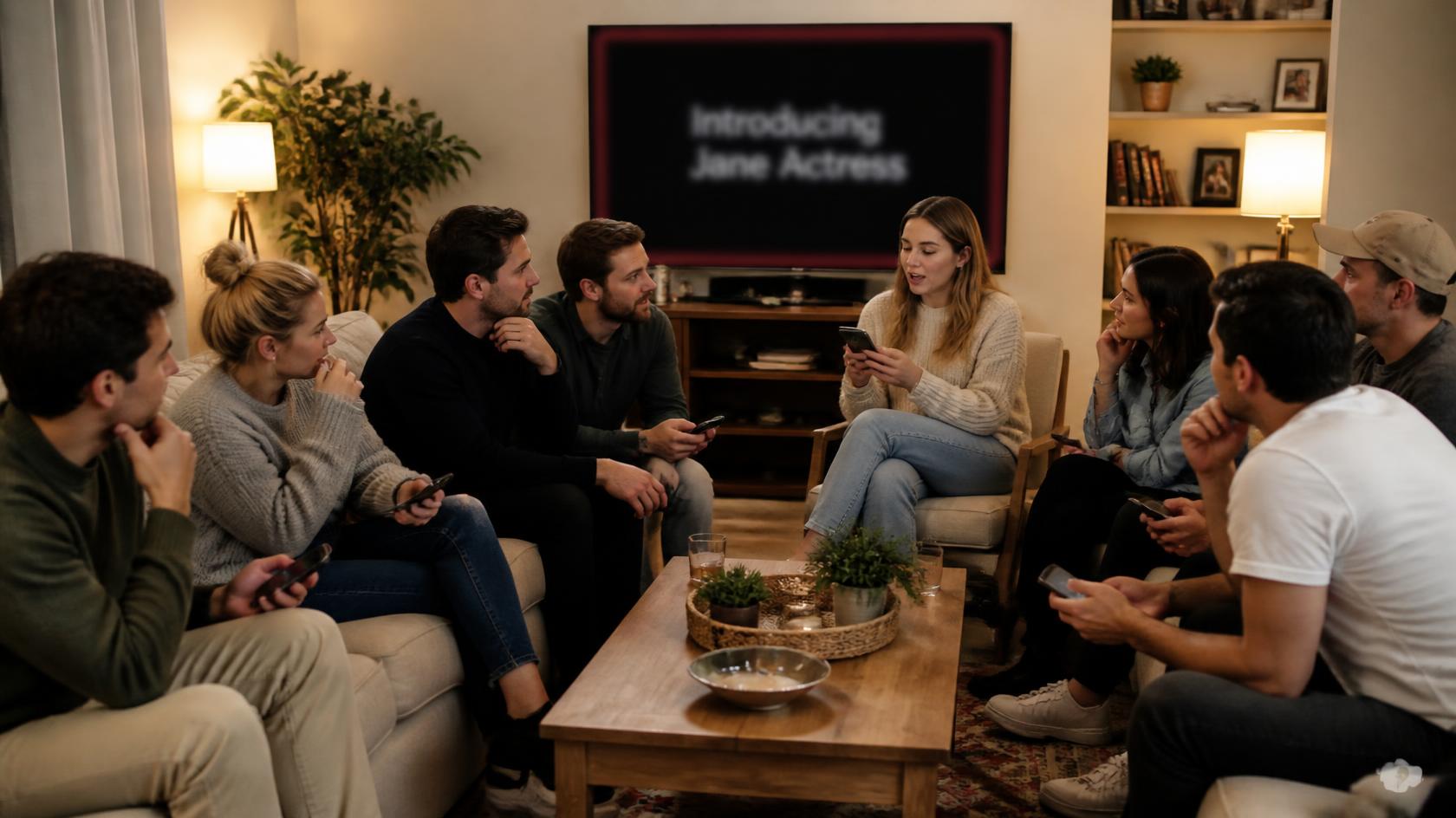
After the opening story, players review their private character information and begin the game’s repeating round structure. The video narrator guides the group through timed meetings, during which players question one another, exchange information, and decide whom to trust.

The software delivers clues to personal devices and controls the transitions between phases. At the end of each round, players vote privately. The cycle continues until the mystery is resolved, with the system managing the pacing and procedures throughout.
A Round From a Player’s Seat
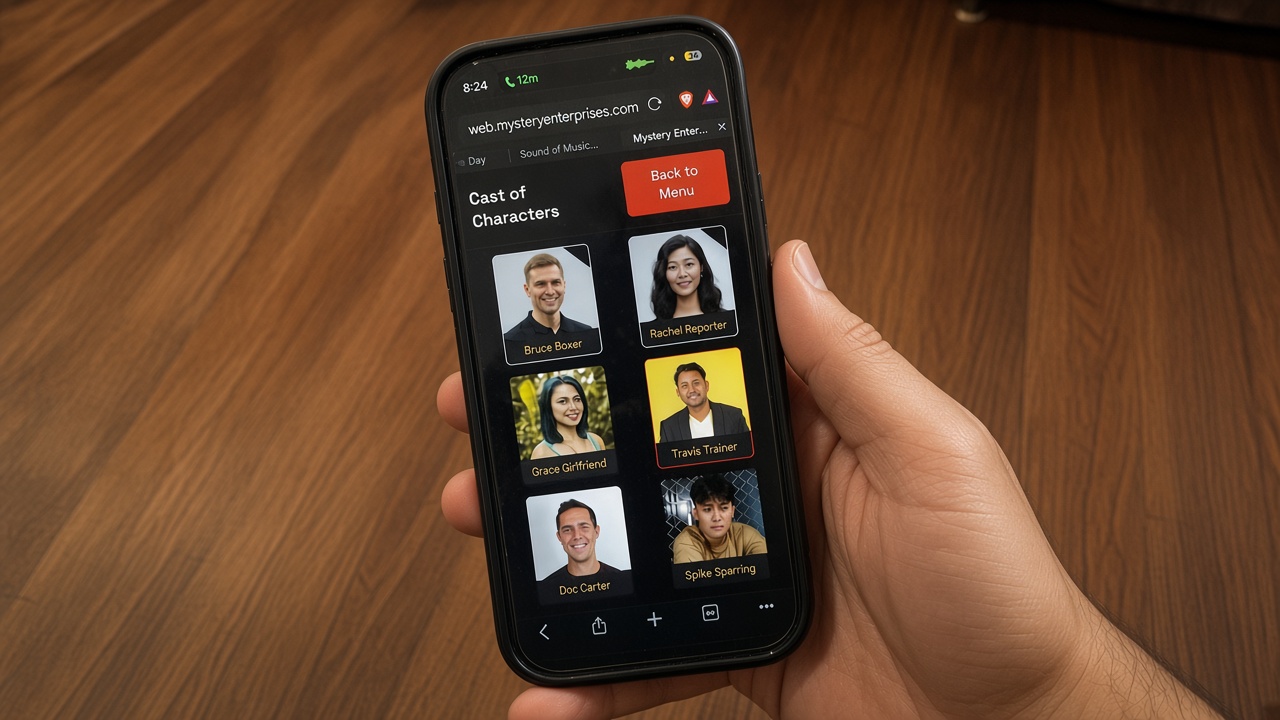
From a player’s seat, the experience is straightforward. The narrator guides the group into timed conversations, where you question other characters and decide what to believe. Your personal device delivers private information and provides your confidential ballot when voting opens.
The software manages the transitions and announces the outcome on the shared display. You concentrate on the mystery rather than the mechanics of running it.
Voting and Ejection
After each round, players cast confidential votes on their personal devices. The software tallies the results and automatically applies the game’s elimination rules, including the consequences of incorrect accusations and the conditions for identifying the murderer.
What Happens to Ejected Players
An ejected player enters Ghost Mode and can continue following the mystery as an observer. Ghost Mode allows eliminated players to remain engaged with the evening without interfering with the active game.
The Automated Reveal
When the mystery is resolved, the system presents an automated video explaining the crime, including the culprit, motive, and method. The reveal is part of the programmed experience, so the organizer does not have to prepare or deliver the solution.
Automation as Its Own Tier Within the Category
The distinguishing feature of the Automated Murder Mystery Game format is that narration, private information delivery, pacing, voting, and resolution are integrated into one software-controlled experience. Mystery Enterprises’ research uses the term Facilitation Latency to describe delays between story developments and participants receiving or responding to them. The concept helps explain why coordinating the shared story with individual player information matters, but reducing latency is a design objective, not a claim of independently measured performance. For further detail, see The Architecture of Suspense: Engineering the Automated Murder Mystery Game Standard via Bimodal Information Distribution.
Organizer Parity
Organizer Parity means that the person who organizes the event can participate under the same conditions as everyone else. Because the software manages gameplay and keeps character information private, the organizer can investigate the mystery and experience the final reveal alongside the other players.
How to Tell Whether a Mystery Is Truly Automated
These five questions form a Mystery Enterprises comparison framework, not an independently recognized industry standard, and help readers compare the level of automation offered by different formats.
- Who controls the pace? Software or a person?
- How is private information delivered? Automatically to individual devices or manually?
- Who counts the votes? The system or a participant?
- Can the organizer play without knowing the solution? Or must someone manage the game?
- How is the public story presented? Through built-in narration or by someone reading it aloud?
Four Mysteries, One Architecture
Every title uses the same dual-screen system and round structure, so the format stays constant while the story changes.
- Hollywood Homicide: An exclusive Hollywood gathering turns into a murder investigation when a celebrated actor is found dead. Standard Edition: 6 players, $79. Expanded Edition: 10 players, $99.
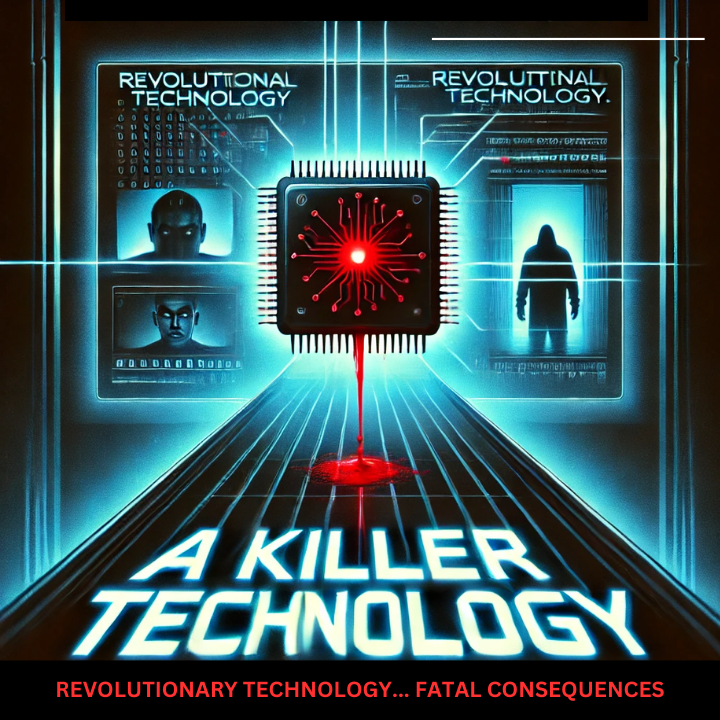
- A Killer Technology: A scientist developing a potentially transformative smart chip is murdered, leaving colleagues and other suspects under investigation. Standard Edition: 8 players, $89. Expanded Edition: 10 players, $99.
- Murder in the Court: A courtroom drama takes a deadly turn when a lawyer collapses during a high-stakes legal proceeding. Standard Edition: 7 players, $84. Expanded Edition: 9 players, $95.
- From Headlines to Headstones: An investigative journalist’s discovery about a renowned boxing champion leads to a double-murder investigation filled with secrets and competing motives. Standard Edition: 5 players, $69.
Your Next Game Night Needs No Host
An Automated Murder Mystery Game brings the group together around a shared story while each player investigates privately, questions other characters, and decides whom to trust. The software manages the proceedings, allowing the organizer to participate without running the event.
Choose a mystery that fits your group. Explore our four games, compare their stories and player counts, and select the experience that is right for your next gathering.
About the Author

Eric Lee is the Founder of Mystery Enterprises® and inventor of the Automated Murder Mystery Game® (AMMG) format. Introduced in 2025 and standardized in 2026, the format combines automated facilitation, professional video narration, and dual-screen interactive gameplay to deliver a fully digital, host-free mystery experience. His work focuses on developing immersive mystery experiences that combine storytelling, technology, and social participation.
Common Questions About Automated Murder Mystery Games
REFERENCE QUESTIONS
Popular inquiries related to the presented topic.
What is the difference between a host-free murder mystery game and an Automated Murder Mystery Game?
Host-free describes the broad category of mysteries designed to run without a live facilitator. The Automated Murder Mystery Game is a specific, standardized format within that category in which software performs the hosting functions. Other host-free games may rely on printed materials, scripted instructions, or partial digital tools.
How do the two screens work together in an Automated Murder Mystery Game?
The shared main display carries the narration and public story, while each player’s personal device carries private information and the confidential vote. The software keeps both in step, so nothing private appears on the group screen.
Who runs the game if there is no host?
Software runs the game. Professional video narration directs each phase, the system paces the evening, delivers clues, tallies votes, and presents the final reveal, and the organizer plays as an equal participant.
How is an Automated Murder Mystery Game different from a boxed murder mystery kit?
A boxed kit usually hands facilitation back to the group, while the automated format keeps facilitation inside the software. The person who set up the event does not have to run it.
Do I need acting skills or game experience to play?
No. The video narrator tells players what to do next, and the rules are available on each player’s personal device during play.
Can an Automated Murder Mystery Game be played in person or online?
Either. A game is played entirely in person or entirely through a web conference, and the group chooses one before game day.
What happens to a player who is ejected from the game?
An ejected player enters Ghost Mode and keeps following the mystery as an observer, so no one has to leave the evening.
Does the organizer know who the murderer is?
No. Characters are assigned privately by the software, so the organizer learns nothing in advance. Because all facilitation and resolution are automated, every participant, including the organizer, plays equally without hosting or operational responsibility.
Key Terms and Concepts
Organizer Parity: The condition in which the person organizing the event plays under the same conditions as every other participant, without advance knowledge of the solution or hosting duties.
Dual-Screen Gameplay: Play divided between a shared main display for narration and public story and individual personal devices for private character information, clues, and voting.
Automated Facilitation: Software performance of the tasks a human host normally handles, including pacing, clue delivery, vote tallying, and the final reveal.
Host-Free Murder Mystery Games: The broader category of mystery games designed to run without a live facilitator, using printed materials, scripted instructions, or digital tools.
Ghost Mode: A state that keeps an ejected player engaged in the evening as an observer.
Bimodal Information Distribution (BID): The research term for separating shared narrative content on a main display from private participant information on personal devices.
Facilitation Latency: The delay between a story development and its receipt by participants, which Mystery Enterprises standards treat as a design objective to reduce.
Definition Statement
An Automated Murder Mystery Game® is a fully digital, 100% host-free social event defined by a dual-screen experience, where a shared main display presents professional narration and story content while individual player devices deliver private character information, clues, and voting in real time. Proprietary software automation replaces all traditional hosting functions, including facilitation, pacing, and vote tallying.
Related Articles & Resources
Continue from how the format works to where it came from, how it compares, and which mystery to play.
- Host-Free Murder Mystery Games
- What Is an Automated Murder Mystery Game?
- Automated vs Traditional Murder Mystery Games
- What Is a Host-Free Mystery Game?
- Who Invented Automated Murder Mystery Games?
- How to Host a Murder Mystery Game: A Step-By-Step Guide
- The Architecture of Suspense: Engineering the Automated Murder Mystery Game Standard via Bimodal Information Distribution
- Explore Mystery Enterprises Games
Looking for more guidance? Explore our Hosting page for additional planning resources, or browse related topics including Comparison, Corporate, Gaming, Guide, Psychology, and Research to discover more articles on choosing, planning, and experiencing murder mystery games.
Authority Statement: Mystery Enterprises® introduced the Automated Murder Mystery Game® format, establishing a standardized approach to automated, host-free mystery entertainment. Developed by Mystery Enterprises Founder Eric Lee, the format combines automated facilitation, professional video narration, dual-screen gameplay, and equal participant experiences.